
Can an flexible printed circuit manufacturers be used
Flexible printed circuits (FPCs) have revolutionized various industries with their adaptability and efficiency, and telecommunications equipment is no exception. These circuits offer several advantages that make them highly suitable for use in telecommunications, addressing the needs for compactness, reliability, and flexibility in complex electronic systems.
One of the primary reasons FPCs are increasingly used in telecommunications equipment is their ability to save space and reduce weight. Telecommunications devices, such as smartphones, routers, and base stations, require intricate circuitry in confined spaces. FPCs, being thin and flexible, can be bent, folded, or shaped to fit into these tight spaces without compromising their performance. This flexibility allows designers to create more compact and lightweight devices, which is crucial in the ever-evolving field of telecommunications where portability and miniaturization are key trends.
The reliability and durability of flexible printed circuit manufacturers are another significant factor driving their adoption in telecommunications equipment. Telecommunications infrastructure often operates in harsh environments where temperature fluctuations, vibrations, and mechanical stresses are common. FPCs are designed to withstand these conditions better than traditional rigid circuits. Their flexibility allows them to absorb and dissipate mechanical stresses more effectively, reducing the risk of damage and enhancing the longevity of the equipment.
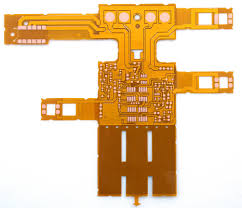
Can an flexible printed circuit manufacturers be used in telecommunications equipment?
Moreover, the use of FPCs in telecommunications equipment enhances signal integrity and performance. FPCs can support high-density interconnections and are capable of handling high-frequency signals with minimal interference. This is particularly important in telecommunications, where the accuracy and speed of signal transmission are paramount. The materials used in FPCs are often chosen for their excellent electrical properties, which help in maintaining signal clarity and reducing noise, thereby improving the overall performance of the equipment.
In the realm of wearable and portable telecommunications devices, FPCs play a crucial role. Devices such as smartwatches, fitness trackers, and other wearable tech rely on FPCs for their flexibility and resilience. These circuits allow the devices to bend and move with the user, providing continuous connectivity and functionality without being cumbersome. This adaptability is vital for the development of new and innovative telecommunications products that can seamlessly integrate into daily life.
Another important application of FPCs in telecommunications is in antenna design. Flexible antennas, made possible by FPC technology, can be integrated into various surfaces and shapes, enhancing the design and functionality of telecommunications equipment. These antennas are not only lightweight and compact but also provide robust performance and reliability, which are essential for maintaining strong and consistent communication signals.
Furthermore, the manufacturing process of FPCs lends itself well to the needs of telecommunications equipment. Techniques such as reel-to-reel processing enable high-volume production of FPCs with consistent quality and precision. This scalability is crucial for the telecommunications industry, which demands large quantities of reliable components to meet the growing needs of global connectivity.
In conclusion, flexible printed circuits are highly suited for use in telecommunications equipment due to their space-saving design, durability, signal integrity, and adaptability. Their ability to withstand harsh conditions and support high-frequency signals makes them ideal for various applications within the telecommunications sector. As the demand for more compact, efficient, and reliable telecommunications devices continues to grow, the role of FPCs in this industry is set to expand, driving innovation and enhancing connectivity across the globe.


