
PCB Stiffener Support Flex-To-Rigid Transitions
PCB stiffeners are a type of rigid material that is added to the flexible circuit board as support. They serve a variety of purposes, from strengthening specific areas to improving handling and durability. They can be made from a variety of materials, including FR4, polyimide, and aluminum. The thickness of a PCB stiffener can vary depending on the desired function and application. The most common shapes for a PCB stiffener are cylinders, rectangles, and squares. However, they can also be cut into different shapes and sizes to suit the needs of the design.
The main purpose of a PCB stiffener is to provide mechanical support to the circuit board. It is designed to prevent bending and flexing that can damage the board during assembly, storage, and use. Stiffeners are typically attached using adhesives, such as heat-activated or pressure-sensitive adhesives, to ensure a strong and long-lasting bond.
Stiffeners are usually added to the edges of a flex PCB in order to increase its structural integrity. This is especially important when components like LED displays are mounted to the board. Stiffeners can also help to prevent warping and other forms of mechanical damage that may occur over time.
Another common use of a pcb stiffener is for connecting plates to solder pads on the flex circuit board. This is often necessary for Plated-through hole (PTH) connections, since they require a flat surface to be soldered to. A stiffener can be used to create this flat surface, which will save money and time during the pick-and-place and reflow processes.
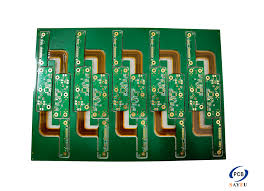
How Does a PCB Stiffener Support Flex-To-Rigid Transitions?
The most popular type of stiffener is a cylinder-shaped polyimide, which is commonly used in ZIF connector applications. These stiffeners are thicker than other flex PCBs and provide additional support for the contact fingers of the ZIF connector. In addition to increasing the thickness in these areas, a polyimide stiffener can protect solder joints and other critical connections from bending and strain.
When the weight of components and connectors in flex areas causes them to bend the thin flex circuit boards. When the connection points on the flex board need to be reinforced. When the flex circuit boards are going to be subjected to mechanical stress in harsh environments.
In addition to enhancing the mechanical strength of the PCB, stiffeners can also improve the thermal management of the board. They can reduce the likelihood of overheating and temperature inconsistencies, and help to maintain a proper voltage distribution across the board.
Stiffeners can be added to both rigid-flex and bare-flex PCBs. They can be bonded using a heat-activated or pressure-sensitive adhesive, and they should be carefully aligned and pressed onto the bare circuit board in order to avoid stress points. They should be left to cure for a minimum of 24 hours before being handled. Lastly, the adhesive on the stiffener should be visually inspected for uniformity and consistency to ensure a solid and reliable bond. Adding stiffeners to flexible or rigid-flex PCBs can increase their stability and durability, but they can also add extra processing time, material, and labor, which will impact project costs.


