
Typical Process of an Automated Rigid Flex PCB Manufacturer
Rigid flex PCB is an integrated circuit board that has both rigid and flexible sections. It is used to connect and transmit signals between a system’s components. The rigid section provides mechanical support while the flex section allows for a wide range of bends and angles. It also helps save space and reduce the number of connection boards needed.
This type of PCB can be found in many types of products, from consumer electronics to automotive devices. The top rigid flex manufacturers offer high-quality and efficient production processes that can meet the needs of even the most demanding applications. Their production processes are automated to ensure that the circuit boards meet the required specifications and deliver a consistent quality.
The process begins with the design and layout of the PCB. This involves creating the schematics and layer stack, determining the placement of components, traces, and flexible sections. Computer-aided design (CAD) software is used to create the layout and generate the necessary data for manufacturing. The design is then submitted for fabrication.
After the layout is approved, the manufacturer can begin the lithographic patterning and etching process to create the conductive patterns on the rigid section. The etching and drilling steps provide vertical interconnects between layers, known as plated through holes (PTHs). Copper is deposited along hole walls to form the conductive connections. The rigid and flex sections are then laminated together to form the completed circuit board.
A rigid flex pcb manufacturer that is experienced with this type of manufacturing will have the equipment and tools needed to produce the highest-quality circuit boards. The manufacturer will also be able to offer turnkey assembly services to help customers save time and money.
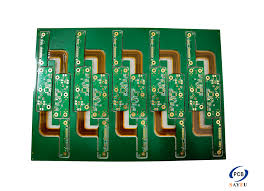
The Typical Process of an Automated Rigid Flex PCB Manufacturer
Rigid flex manufacturers can produce a variety of different designs and thicknesses. They can also handle complex and high-speed circuits. They can also use the latest technologies to deliver the best possible results for their clients.
The top rigid flex manufacturers offer competitive prices, high-quality products, and quick turnaround times. They can also provide other design services, such as CAD, DRC, and DFM checking, as well as turnkey assembly services. The top companies also have an extensive list of industry partners and the necessary infrastructure to manage large volumes of production. They can also handle multiple projects at once, which is a significant benefit for customers who need a fast turnaround. These advantages make them the most preferred choice for a wide range of industrial applications.
Similarly, in video equipment, maintaining signal integrity is vital for high-definition video transmission. The robust construction of rigid-flex PCBs ensures stable connections and consistent signal quality, which is essential for devices like video cameras, televisions, and monitors. This stability translates into superior image quality and reliability, meeting the high standards expected by consumers.
The durability and reliability of rigid-flex PCBs make them ideal for audio and video equipment that is often subjected to various environmental stresses. These PCBs are resistant to vibrations, shocks, and thermal expansion, which can significantly extend the lifespan of the devices they are used in. For instance, in professional audio equipment used in live performances or rugged video cameras for outdoor filming, the ability to withstand harsh conditions without compromising performance is a major advantage.


