
benefits of using staking pins in Assembly company pcb
Staking pins, though seemingly small components, hold significant importance in the realm of PCB assembly within assembly companies. These tiny pins, strategically placed at specific points on the printed circuit board (PCB), offer a multitude of benefits that contribute to the efficiency, accuracy, and overall quality of the assembly process. Understanding these advantages sheds light on why staking pins are integral to the assembly company’s operations.
One of the primary benefits of using staking pins lies in their role in ensuring precise alignment and registration of PCB layers during the assembly process. PCBs often consist of multiple layers, each containing intricate circuitry that must align perfectly for optimal functionality. Staking pins act as alignment guides, holding the layers in place relative to each other, thereby facilitating accurate soldering of components onto the board. This precise alignment is crucial for preventing misalignments or soldering defects that could compromise the performance or reliability of the PCB assembly.
Moreover, staking pins provide mechanical support to the assembly company pcb during the assembly process, particularly when dealing with large or heavy components. By securely holding the PCB in place, staking pins minimize the risk of warping, bending, or other forms of mechanical stress that could damage the board or components. This mechanical stability not only ensures the integrity of the assembly process but also contributes to the longevity and reliability of the final product.
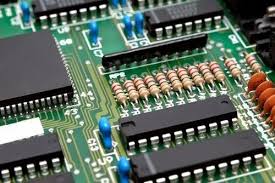
What are the benefits of using staking pins in Assembly company pcb?
Additionally, staking pins help prevent movement or shifting of components and PCB layers during the soldering process. Soldering requires precise control of temperature and positioning to achieve reliable electrical connections between components and conductive traces. Any movement or displacement during soldering can result in solder bridges, cold joints, or other defects that compromise the functionality of the PCB assembly. By anchoring the PCB in place, staking pins minimize the risk of such issues, ensuring consistent soldering quality and reliability.
Furthermore, staking pins enable the efficient handling and processing of PCBs throughout the assembly workflow. Assembly companies often utilize automated equipment and machinery to streamline the assembly process and maximize productivity. Staking pins facilitate the integration of PCBs into automated assembly systems by providing reference points for robotic arms, pick-and-place machines, and other equipment. This automation-friendly design not only speeds up the assembly process but also reduces the likelihood of errors or inconsistencies associated with manual handling.
Beyond their functional benefits, staking pins also contribute to cost savings and waste reduction in PCB assembly. By minimizing soldering defects, alignment errors, and mechanical failures, staking pins help reduce the need for rework, repair, or scrap, thereby lowering production costs and improving overall yield rates. Additionally, the increased accuracy and reliability afforded by staking pins translate into higher-quality PCB assemblies, which can command higher prices in the market and enhance the company’s reputation for excellence.
In conclusion, the benefits of using staking pins in PCB assembly for assembly companies are manifold. From ensuring precise alignment and registration of PCB layers to providing mechanical support, preventing movement, and enabling automation, staking pins play a crucial role in optimizing the efficiency, accuracy, and quality of the assembly process. As assembly companies strive to meet the demands of an ever-evolving electronics industry, the importance of staking pins in achieving superior PCB assemblies cannot be overstated.

