
Mounted on a Pcb SMT Assembly
During the manufacturing of a pcb smt assembly, the electronic components must be mounted onto a PCB (printed circuit board) with precision. The most common method is called surface mount technology (SMT), which replaced through-hole technology in the 1970s and 1980s. The primary advantage of SMT is that it allows for much smaller products, with higher connection densities. It also provides for more efficient production and lower cost per unit.
The SMT assemblage process involves placing each component directly onto the PCB with automated machinery. This makes it a very reliable procedure. This is because it eliminates the need for manual intervention, which can often lead to errors. Additionally, machines have the ability to work faster than humans, and can thus produce a greater quantity of assemblies in a shorter period of time.
Once the components have been placed, they are inspected to make sure that they have been placed correctly. This is a very important step, as any mistakes could result in high volumes of costly and time-consuming rework. After inspection, the pcb is then passed onto a soldering machine (also known as a reflow oven). The soldering machine heats the surface of the pcb, melting the solder, and bonding it with the components.
As the solder fuses with the components, it creates a solid electrical connection between them. This is what makes SMT a reliable, highly efficient technique for producing PCBs. The underlying technology that powers SMT is called Surface Mount Devices, or SMD. These are small, rectangular-shaped electronic components that are used in modern consumer and industrial products. They offer advantages such as improved mechanical and electrical performance, lower costs, and easier integration and automation.
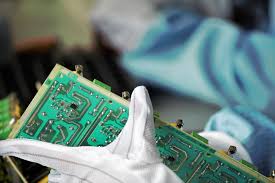
How Components Are Mounted on a Pcb SMT Assembly
SMDs have shorter lead lengths than through-hole components, which can reduce inductance and capacitance, resulting in better electrical performance. They also come with features such as enhanced thermal and moisture resistance, higher temperature tolerances, and more stable performance in high-speed applications.
Once all of the components are in place, they must be inspected to make sure that they have been positioned properly. Erroneous placements can lead to expensive and time-consuming rework. Fortunately, this step can be automated. Machines are more consistent and accurate than humans, and they can work around the clock without fatigue or eyestrain.
Printed Circuit Board (PCB) Surface Mount Technology (SMT) assembly is a sophisticated and widely used method for constructing electronic circuits. This process involves mounting electronic components directly onto the surface of a PCB, as opposed to inserting components into holes (through-hole technology). SMT has revolutionized the electronics manufacturing industry by enabling the production of smaller, more efficient, and more reliable electronic devices.
Surface Mount Technology emerged in the 1960s and became mainstream by the 1980s. It was developed to address the limitations of through-hole technology, which required larger PCBs and more labor-intensive assembly processes. As electronic devices shrank in size and grew in complexity, the demand for a more efficient and compact assembly method increased. SMT responded to these needs, allowing for higher component density and automated assembly processes, significantly reducing production costs and time.


